
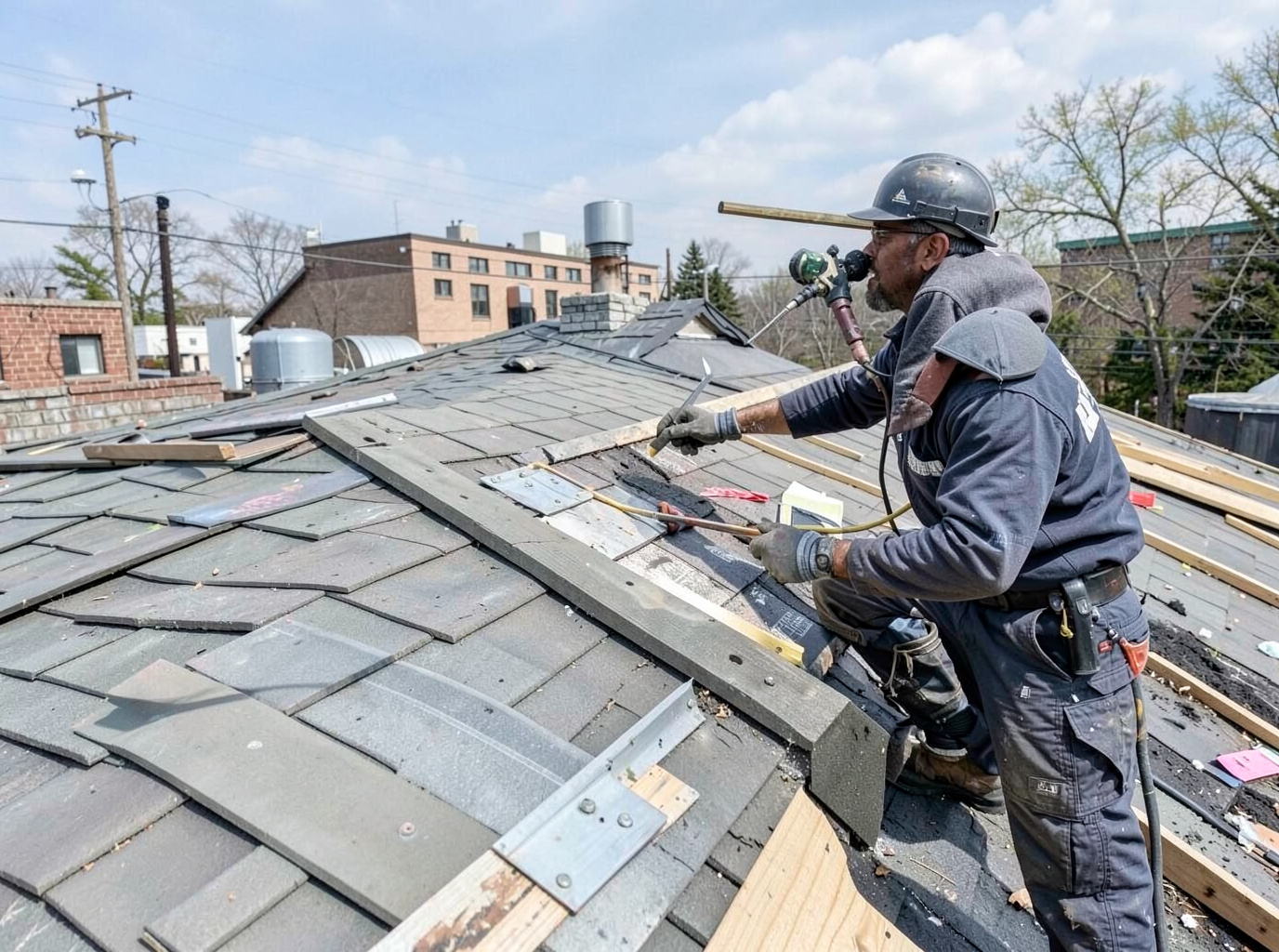
Utica's humid continental climate brings heavy winter snow that piles on roofs in neighborhoods like Cornhill and East Utica. Older homes there often carry original slate or asphalt layers over rafters that have settled unevenly over decades. Replacement starts with full tear-off to inspect decking for rot from ice dam cycles that form along the Erie Canal corridor where humidity lingers. Proper underlayment and ice-and-water shield placement in valleys and eaves prevents leaks that show up first in spring thaws.
Homes near the Utica Memorial Auditorium and Munson-Williams-Proctor Arts Institute frequently sit on steeper pitches that shed snow differently than flatter roofs common in West Utica. Choosing between architectural shingles and metal panels depends on how wind funnels through the valley and how quickly snow slides off during March storms. Crews verify flashing details around chimneys and dormers because those penetrations fail first when temperatures swing from single digits to above freezing in a single day.
Oneida County permitting requires documentation of wind uplift ratings suited to regional gusts that reach the higher elevations around South Utica. Material delivery must account for narrow streets in Downtown Utica where staging space is limited, so crews stage bundles on the ground and hand-carry to avoid blocking traffic near the Utica Zoo access roads.
Nearby competition from Syracuse and Albany crews often underestimates local snow-load requirements, leading to callbacks after the first heavy winter. Local replacement work focuses on ridge ventilation sized for the attic volumes typical in 1920s–1950s stock so moisture does not build up during warm summer months.
Technician insight
In Utica the thing that catches most people out with roof replacement is underestimating how quickly ice dams form on the north-facing eaves of 1920s homes in Cornhill and East Utica when warm air from the house melts snow that then refreezes overnight.
Ice Dam Damage on East Utica Home
Homeowner noticed repeated ceiling stains after winter storms. Inspection showed failed underlayment and rotted decking along the north eaves. Full tear-off revealed two layers of original shingles compressing insulation. New ice-and-water shield, ventilation, and architectural shingles were installed, stopping leaks through the next thaw cycle.
Roof Replacement Services We Offer
✓Asphalt Shingle Roof Replacement
Full tear-off and installation of architectural shingles rated for Oneida County snow loads, including new drip edge and ridge vent.
✓Metal Roof Replacement
Standing seam or screw-down metal panels installed over older homes in South Utica where wind and sliding snow create extra stress on fasteners.
✓Slate Roof Replacement
Careful removal and reinstallation of slate on historic structures in Cornhill, matching existing thickness and using copper flashing at chimneys.
✓Flat Roof Replacement
Modified bitumen or EPDM membrane systems for low-slope sections common on additions in East Utica, with proper tapered insulation for drainage.
✓Ice Dam Prevention During Replacement
Installation of self-adhering ice-and-water shield along eaves and valleys to stop leaks during Utica's freeze-thaw cycles.
Roof Replacement Cost in Utica, NY
| Service | Typical Range | What Affects It |
|---|---|---|
| Asphalt Shingle Replacement | $6,500–$12,000 | Varies with square footage, pitch, and tear-off layers in older Utica homes. |
| Metal Panel Replacement | $9,000–$16,000 | Higher for steep roofs in South Utica and wind-exposed locations. |
| Slate Roof Replacement | $12,000–$22,000 | Depends on matching existing slate and copper flashing details. |
| Ice-and-Water Shield Upgrade | $800–$1,800 | Added cost for full eave coverage on homes with known ice dam history. |
Ranges are typical for Utica, NY and confirmed with an exact written quote before any work starts.
How it works
- 1
On-Site Inspection
Measure the roof, check deck condition, and note snow-load concerns specific to the neighborhood and home age.
- 2
Material Selection
Review shingle or metal options that meet local wind and snow requirements with the homeowner.
- 3
Full Tear-Off
Remove existing layers down to decking, replace rotten boards, and install new underlayment and ice shield.
- 4
Installation and Flashing
Lay new roofing, seal all penetrations, and install ridge vent sized for the attic.
- 5
Final Walk-Through
Clean debris, inspect every seam, and provide the homeowner with care instructions for the first winter.
Pricing
Upfront quotes after inspection; price varies by material, pitch, and number of layers removed.